Elijah Williams
Batman, the iconic figure in pop culture, has been constantly reimagined across various platforms such as comics, television, animation, and film. After a brief and psychedelic detour with the 1966 Batman movie starring Adam West, the Caped Crusader made a serious comeback on the big screen during the Batman renaissance of the 1980s. Starting with Tim Burton’s stylish interpretation of the Dark Knight, audiences have witnessed several versions of Gotham’s protector rise and fall over the decades. Some have been darker, some stranger, and some simply unforgettable. Here are our top picks for the best Batman movies.
The Best Batman Movies as of 2026
Every Batman story begins with the same tragic origin: young Bruce Wayne witnesses his parents’ murder and grows up to become Gotham’s masked vigilante. Despite the consistent backstory, the character has taken many different forms over the years. Some portrayals lean into campy fun, like Batman & Robin, while others embrace a darker, more grounded tone, as seen in Christopher Nolan’s trilogy. The result is a character with many interpretations, meaning there’s a Batman for everyone. Here are our top picks, listed in chronological order.
Batman (1989)
Despite Roger Ebert’s critique on the lack of substance, Tim Burton’s Batman is an iconic superhero classic that stands out in its own unique way. It may not be the best Batman movie ever made, but it was a key film that brought superheroes into the cinema spotlight. This Burtonian-gothic spectacle took audiences by storm, shaking them up and leaving them wanting more. Michael Keaton’s Batman faces off against Jack Nicholson’s Joker as the latter wreaks havoc on Gotham City. While Nolan’s take on The Dark Knight often overshadows this particular version of the Caped Crusader’s adventures, no other Batman film captured the feel of the comics quite like this one.
A significant part of its charm comes not only from Burton but also from other creators on the production team. Production designer Anton Furst created an industrial Gotham straight out of a graphic novel, earning the film the Academy Award for Best Art Direction. Cinematographer Roger Pratt complements this world with an ultra-noir contrast of shadow and light, and a smoky atmosphere that reinforces Burton’s gothic vision. The result is a Gotham that is both fantastical and oppressive. Robert Ebert did mention the achievement of the design, calling it “one of the most distinctive and atmospheric places I’ve seen in the movies. It’s a shame something more memorable doesn’t happen there.”
Alright, Roger, we have to agree to some extent. It does lean more towards style than substance. However, there are plenty of reasons we included this one on our list, and we have to give credit to Tim Burton’s boldness. He took a risk and presented a comic hero in a serious light. At the time, comic books were widely regarded as a pastime for nerds and kids. In typical Burton fashion, Batman helped pave the way for the superhero mania that would strike in the 2010s and made audiences rethink comics as a medium.
Batman Returns (1992)
Burton’s back with Batman Returns, a sequel that has earned a devoted following. Yes, the original was strange, but this one delves even deeper into Tim Burton’s wonderfully weird mind. This Batman movie feels like a gothic fairy tale come to life, yet tempered by a distinctly 90s, gritty cinematic flavor. Between this unique flavor profile and the psychological complexity of the characters, we’ve got one wild cocktail. It’s not to everyone’s taste, of course.
Like his first film, Batman Returns’ success is largely due to Burton’s Gotham City and the triumph of production design (Bo Welch). The city is a perpetually snow-covered nightmare that practically deserves its own cast credit, a living, breathing character in its own right. We also have to mention cinematographer Stefan Czapsky. Then, of course, moving to on-camera work, we have the absolutely feline glory of Michelle Pfeiffer’s Catwoman. Sure, other actresses have rocked Selina Kyle over the years, but Pfeiffer’s performance is iconic — the tension between her and Batman (a returning Michael Keaton) has never been hotter on screen. (Can we even say that on this site?)
For every ounce of femme fatale sensuality, Danny DeVito dishes out even more menace in the grotesque, genuinely disturbing Penguin (a masterful Danny DeVito). Between all of these performances, we’ve got a kaleidoscope of some of Gotham’s most memorable characters. The film’s campy touches, heightened sexuality, and amped-up strangeness may not have been what critics or audiences expected at the time, but those very elements have kept Batman Returns alive in memory and cemented its place as a cult classic.
Batman: Mask of the Phantasm (1993)
Yes, this is an animated Batman movie, but it’s a classic from the golden age of the cartoon era, and you definitely don’t want to miss it. Some might even argue it’s the best Batman movie, period. If you’re a Batman fan but somehow have missed this one, it’s time to correct that. In Mask of the Phantasm, a young Bruce Wayne decides to avenge his parents’ deaths by fighting crime in Gotham City. While grieving his parents, he meets Andrea Beaumont, with whom he bonds over the loss of loved ones. Bruce ultimately needs to make a decision that will define his future. Does he choose love, or his promise to avenge his parents? Can he have both?
Now, what criteria are we using to give this a place on our best-of list? Aside from a solid script, the team behind Mask of the Phantasm earns its laurels for its animation and art direction. We’re talking Capital S – Stunning. The film uses the dark Art Deco style of Batman: The Animated Series, but elevates it to a theatrical level. Every frame looks like it could be a painting, with shadows and lighting that perfectly capture Batman’s gothic world.
We’re also very invested in the Andrea Beaumont storyline, which gives us the most heartfelt exploration of Bruce Wayne’s romantic life. We see what Bruce gave up to become Batman, making his sacrifice feel tragic rather than just noble. The film reveals how close he came to choosing happiness over avenging his parents, and it makes us wonder whether “avenging” is a good enough reason to pursue anything. What’s beyond the traumatic incident that makes a person’s mission matter? Aside from these big picture ideas, the film also treats animation as a legitimate storytelling medium rather than just “a cartoon.”
Batman Begins (2005)
Oh, Christopher Nolan. Bless you! We just have to say it — no one else could have led the relaunch on this franchise the way he did. At the time, Nolan had only three major features under his belt (Following, Memento, and Insomnia), yet Warner Bros. entrusted him with one of the biggest superhero franchises in cinematic history. After the disaster that was 1997’s Batman & Robin, the studio desperately needed someone who could bring a fresh vision. Nolan delivered that in spades.
Batman Begins essentially starts to tell the origin story we all know: young Bruce Wayne witnesses his parents’ murder, grows up with wealth and privilege, and becomes consumed by rage and a sense of justice. Nolan’s take goes deeper than the surface tragedy, taking Bruce around the world, immersing him in the criminal underworld, and training him with the League of Shadows. This is also as much a character drama as an action film, so we really get to understand Bruce and the events that make him a symbol of hope in a broken city.
Outstanding performances from an ensemble cast, including Katie Holmes, Michael Caine, Liam Neeson, Cillian Murphy, Morgan Freeman, Ken Watanabe, and Tom Wilkinson, only enhance the film’s value. James Newton Howard and Hans Zimmer composed the score, so it goes without saying that you’ll feel this film as much as see it.
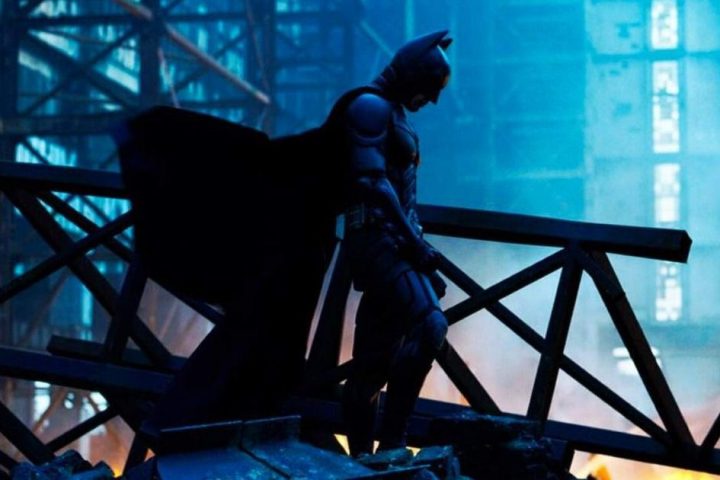
The Dark Knight (2008)
The Dark Knight is one of those film sequels that has earned a place in cinema history, right up there alongside The Godfather Part II. The Dark Knight follows up Batman Begins when Batman faces his greatest challenge: the Joker (the indomitable Heath Ledger) unleashes chaos on Gotham City. This forces Bruce to confront the limits of his moral code and the ethics of his vigilantism. As the Joker’s schemes slowly corrupt Gotham’s “White Knight,” district attorney Harvey Dent, Batman must make impossible choices to protect the city and the people who represent its light. But as the Joker makes painfully clear, anything — even the noblest of men — can be corrupted if you push hard enough.
There are plenty of reasons Dark Knight is widely considered the best Batman movie. It goes without saying that Heath Ledger’s performance was largely responsible for this film’s success. While Jack Nicholson’s Joker was certainly legendary, Ledger’s is perhaps the most terrifying. This version of the Joker is a force of nature rather than a comic-book bad guy, and Ledger backs that up with a psychologically complex performance. Aside from being a great superhero flick, the film also grapples with heavy themes about order versus chaos, the price of heroism, and whether good people can be corrupted. It’s also subversive enough to comment on current events, particularly the ethical concerns regarding the rapidly advancing technology and the sweeping expanse of surveillance on citizens, even if the justification from politicians (or indeed, Batman himself) suggests it might be for necessary good.
The Dark Knight Rises (2012)
As is unfortunately often the case with trilogies, many start with a bang and end with a whimper. But with Christopher Nolan, being Christopher Nolan, we were always in for a satisfying conclusion. Both critics and fans may have mixed opinions on this one, but it’s hard not to appreciate the closure it brings to the trilogy. Though most would say The Dark Knight Rises is the weakest of the Nolan trilogy, it still stands on its own as an ambitious achievement in both superhero cinema and filmmaking.
This time around, where the Joker gave us an unhinged, devil-may-care sort of charm, we get the complete opposite in the form of the absolute beast that is Bane (Tom Hardy