Anika Patel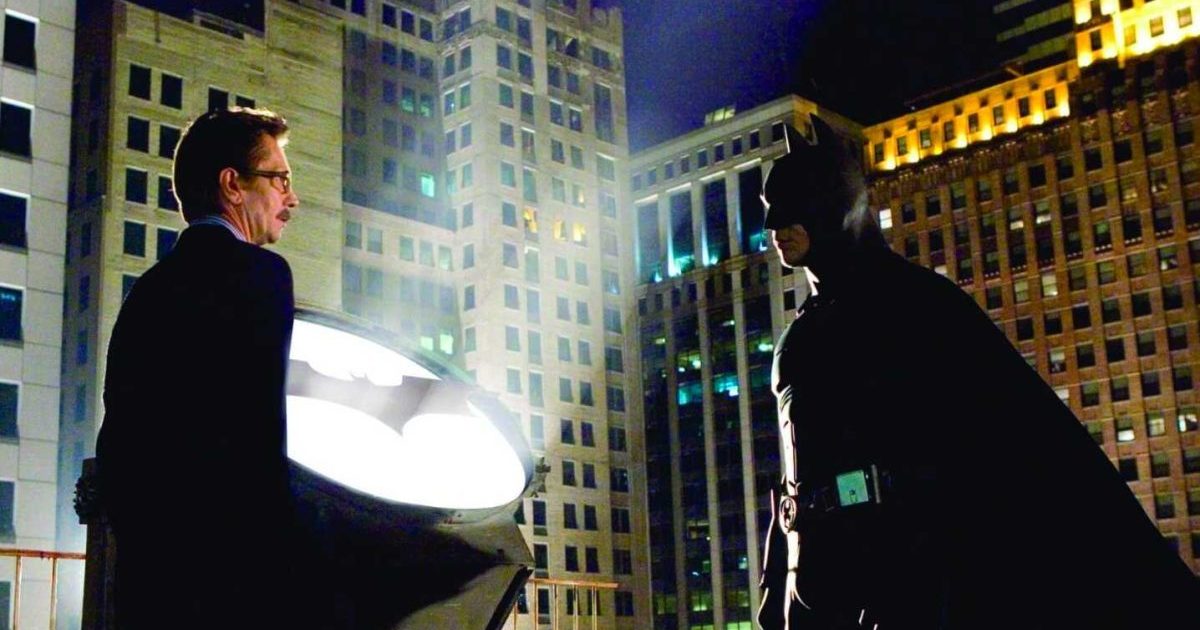
As whispers of Batman 2 starting production later this month begin to circulate, we can’t help but feel a surge of excitement. It’s the perfect excuse to dive headfirst into a Batman movie marathon. But remember, the order in which you watch these films can greatly enhance your viewing experience. And let’s face it, the timeline can get a bit murky pre-Nolan trilogy. Whether you’re a Batman newbie or a seasoned fan since the 1966 classic, we’ve got the ultimate Batman movie watch order for you.
What’s the optimal order to watch the Batman movies in 2026?
For this guide, we’re focusing solely on the live-action films. However, we can’t help but give a shout-out to some of the top-notch animated Batman movies: Batman: Mask of the Phantasm (1993), Batman: The Long Halloween Part One (2021), Batman: The Long Halloween Part Two (2021), and of course, The Lego Batman Movie (2017). The latter currently holds the second-highest Rotten Tomatoes score among widely released Batman films, just behind The Dark Knight.
No matter which order you choose to watch the films in — and whichever Batman movies you select, live-action or animated — we strongly suggest going by release date. This approach allows you to experience the movies as audiences did at the time. Plus, watching in strict chronological order can get confusing, given the franchise’s multiple eras and overlapping continuities.
The Original Batman
Batman: The Movie (1966)
Directed by Leslie Martinson, Batman: The Movie is a big-screen adaptation of the hit TV series, featuring our caped hero Batman (Adam West) and his sidekick Robin (Burt Ward). This family-friendly adventure sees Batman and Robin battling against a formidable team of their greatest foes, including the Joker, Penguin, Riddler, and Catwoman. The villainous quartet join forces in a plot to take over the world, using a secret invention that can dehydrate humans into dust.
True to its 1960s roots, the film is brimming with vibrant camp, wild gadgets like the Batmobile, Batcopter, and utility belts, and plenty of tongue-in-cheek fun. It’s pure Silver Age comic book energy at its peak and is still a blast to watch.
The Burton & Schumacher Era
Batman (1989)
After a long hiatus, the franchise was revived under the direction of Tim Burton, who steered the tone away from superhero comic heroism and towards a darker, more stylistic atmosphere, complete with a haunting Danny Elfman soundtrack. Michael Keaton, initially an unpopular choice for Bruce Wayne, proved his critics wrong with his portrayal of the wealthy industrialist who secretly fights crime as Batman. And of course, the legendary Jack Nicholson delivers an unforgettable performance as the Joker.
The plot revolves around Gotham City descending into chaos after mob enforcer Jack Napier falls into a vat of chemicals during a confrontation with Batman, transforming him into the maniacal Joker. As the Joker wreaks havoc with his deadly “Smilex” toxin, which causes victims to die laughing, Bruce struggles to balance his double life as he develops a relationship with photojournalist Vicki Vale (Kim Basinger). The story culminates in a dramatic showdown in Gotham Cathedral.
Batman Returns (1992)
Following the success of the 1989 relaunch, Batman Returns introduces us to a terrifying Danny DeVito as the Penguin and a stunningly captivating Catwoman, played by Michelle Pfeiffer. Michael Keaton returns in this darker, more eccentric sequel that follows Penguin’s attempt to infiltrate Gotham’s elite society while secretly plotting revenge on the city that abandoned him. And let’s not delve too much into why there are penguins in the sewers…
Joining forces with corrupt businessman Max Shreck (Christopher Walken), Penguin hatches a plan to kidnap Gotham’s firstborn sons. Alongside this Batman vs. Penguin plot, we also witness Selina Kyle’s transformation story: left for dead by Shreck, she reinvents herself as Catwoman, becoming both an ally and an enemy to Batman.
Batman Forever (1995)
With Tim Burton stepping down after Batman Returns, Joel Schumacher took the reins, leading to a significant shift in Batman’s vision and prompting Michael Keaton to step down, with Val Kilmer stepping in. This would be Kilmer’s only film as Batman, reportedly due to conflicts during filming. Interestingly, he didn’t even read the script and took the role simply because he loved the comics as a kid. A fun fact for all you trivia buffs out there.
As for the plot, Batman Forever adopts a much lighter tone than Tim Burton’s films, even bordering on goofy at times. Particularly when an unhinged scientist, played by the movie-saving Jim Carrey, selects his villain persona and costume on the computer. Alongside Carrey’s Edward Nygma, the story introduces Harvey Dent as Two-Face, played by Tommy Lee Jones. Both villains have twisted plans to take over Gotham, forcing Batman to confront their schemes while also juggling the mystery of a new love interest, Dr. Chase Meridian (Nicole Kidman).
Batman & Robin (1997)
With Val Kilmer out, George Clooney steps into the role of Batman. The last film in this era, Joel Schumacher returns as director for the campiest, neon-bright entry in the franchise. Yes, Batman: The Movie (1966) had camp, but it knew what it was doing. Sadly, this one doesn’t.
Gotham is in chaos as two villains — Mr. Freeze (Arnold Schwarzenegger), who wants to freeze the world to save his terminally ill wife, and Poison Ivy (Uma Thurman), a seductive eco-terrorist — team up to take over the city. Despite a star-studded cast that included Thurman and Schwarzenegger, as well as Chris O’Donnell as Robin, Alicia Silverstone as Batgirl, Michael Gough as Alfred, and Pat Hingle as Commissioner Gordon, the film is often considered the weakest of all Batman movies. We’re talking 11% on Rotten Tomatoes. Ouch. Too much neon, too many one-line zingers, and way too many icy gimmicks.
Christopher Nolan era
Batman Begins (2005)
Fast forward to the start of an era that would redefine superhero movies, Batman Begins marked the official relaunch of the franchise under Christopher Nolan’s direction. This reboot gave the film a darker, more realistic take on Gotham and the Dark Knight’s origins. Christian Bale stars as Bruce Wayne, a wealthy orphan traumatized by witnessing his parents’ murder. Struggling with fear and a desire for justice, Bruce travels the world, training with the League of Shadows under Ra’s al Ghul (Liam Neeson).
Bruce returns to Gotham, where he adopts the mantle of Batman to fight crime without losing his moral compass. He faces the corrupt Dr. Jonathan Crane, aka Scarecrow (played by the brilliant Cillian Murphy), who uses a fear-inducing toxin to terrorize the city. With a fantastic supporting ensemble, including Morgan Freeman as Lucius Fox, Michael Caine as Alfred, and Tom Wilkinson as Carmine Falcone, Batman Begins was a strong start to an unforgettable trilogy.
The Dark Knight (2008)
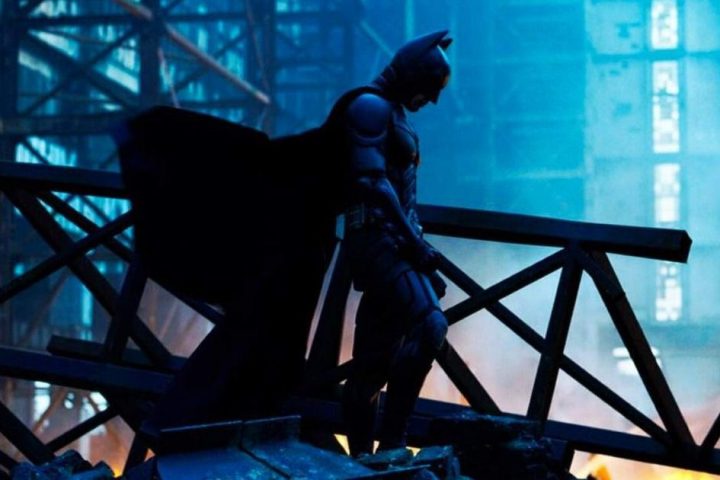
The Dark Knight is, and will forever be, the best Batman movie ever. Directed by Christopher Nolan from a screenplay he co-wrote with his brother Jonathan Nolan, The Dark Knight introduces a new villain in the form of the Joker, played by an absolutely unhinged Heath Ledger.
Unlike typical villains, the Joker isn’t motivated by money or power. He’s an anarchist who wants to prove that even the most moral people can be corrupted. Batman teams up with Lt. James Gordon (Gary Oldman) and newly elected district attorney Harvey Dent (Aaron Eckhart) to dismantle organized crime, but the Joker’s schemes push Gotham, and Batman himself, into moral and ethical crises. The Joker kidnaps Dent and Rachel Dawes (Maggie Gyllenhaal), forcing Batman to make an impossible choice that ultimately leads to Dent’s transformation into the vengeful Two-Face.
In addition to the legendary, violent pencil scene, The Dark Knight famously presents a real trolley-problem dilemma involving passengers on two ferries. It also tackles the issue of mass surveillance: using Lucius Fox’s technology, Batman taps into cellphones to save the day — a significant ethical conflict, and one that’s clearly portrayed as a tool that shouldn’t be used, even for